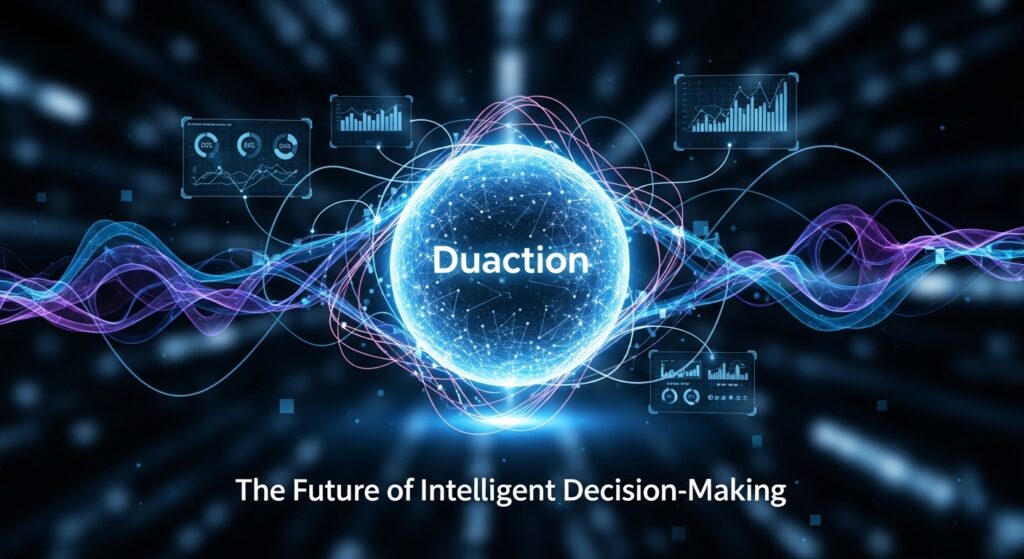
In a world overflowing with data, organizations and individuals alike face an increasing challenge: making decisions that are not only timely but also accurate. This is where duaction comes into play. At its core, duaction is an innovative framework that combines analytical intelligence with adaptive strategies to improve decision-making processes. Unlike traditional methods that rely solely on historical data, duaction integrates dynamic feedback, predictive modeling, and human insight to create a system capable of handling uncertainty and complexity.
The power of duaction lies in its ability to anticipate outcomes, reduce risk, and enhance overall efficiency. Businesses that adopt duaction frameworks often report higher productivity, better resource management, and a competitive edge in their respective industries. This article explores the mechanisms of duaction, its applications across various sectors, and its potential to redefine the future of intelligent decision-making.
The Core Principles of Duaction
Duaction is not just a single tool or software; it is a methodology based on several guiding principles that ensure optimal results. Understanding these principles is key to leveraging duaction effectively.
Adaptive Intelligence
Adaptive intelligence is the foundation of duaction. It allows systems to learn from past decisions and adjust strategies accordingly. By continuously monitoring outcomes, duaction systems can evolve and optimize future actions. This principle ensures that the decision-making process is not static but rather dynamic and responsive.
Predictive Analytics
Predictive analytics within duaction utilizes historical data, trends, and patterns to forecast future outcomes. Unlike conventional forecasting, duaction integrates multiple variables, including human behavioral data, to provide more accurate and actionable insights. This capability is especially valuable in industries such as finance, logistics, and healthcare.
Human-Centric Design
While duaction heavily relies on technology, it emphasizes the role of human judgment. Decision-making frameworks are structured to incorporate human expertise, ethical considerations, and contextual knowledge. This ensures that duaction does not replace humans but rather enhances their capabilities.
Risk Mitigation
One of the key advantages of duaction is its ability to identify potential risks before they manifest. Through simulations and scenario analysis, duaction systems evaluate multiple possibilities and suggest strategies to minimize adverse outcomes. This proactive approach distinguishes duaction from traditional reactive decision-making methods.
Applications of Duaction Across Industries
Duaction’s versatility allows it to be applied in various sectors, each benefiting from tailored strategies and data integration.
Business and Corporate Strategy
Companies utilize to optimize operations, streamline supply chains, and enhance market positioning. For example, predictive models in can forecast consumer behavior, allowing businesses to adjust marketing strategies in real-time. Table 1 below demonstrates a simplified example of resource allocation using duaction principles.
| Department | Traditional Allocation | Duaction Optimized Allocation | Expected Outcome |
|---|---|---|---|
| Marketing | 30% | 25% | Improved ROI |
| Operations | 40% | 35% | Reduced bottlenecks |
| R&D | 20% | 30% | Accelerated innovation |
| Customer Support | 10% | 10% | Maintained service quality |
Healthcare and Medical Decision-Making
In healthcare, can significantly improve patient outcomes. By integrating patient data with predictive analytics, medical teams can anticipate complications, optimize treatment plans, and allocate resources efficiently. Hospitals implementing frameworks often see reduced readmission rates and improved overall care quality.
Education and E-Learning
The education sector benefits from by personalizing learning experiences. Adaptive learning platforms powered by analyze student performance, identify knowledge gaps, and recommend tailored study plans. This approach enhances learning efficiency and ensures that educational resources are utilized effectively.
Finance and Investment
Investment strategies require precise timing and risk assessment. Duacton enables financial institutions to evaluate market trends, assess potential risks, and optimize investment portfolios. By combining real-time data with predictive insights, investors can make informed decisions that balance growth and security.
Components of a Duaction System
To implement effectively, organizations need to understand its key components. Each component contributes to the overall intelligence and efficiency of the system.
Data Integration Layer
The data integration layer consolidates information from multiple sources, ensuring that duaction systems have a comprehensive and accurate data set. This layer includes structured data from databases, unstructured data from social media, and external market data.
Analytical Engine
The analytical engine is responsible for processing and analyzing the data. It applies statistical models, machine learning algorithms, and simulations to generate actionable insights. The engine continuously refines its outputs based on new data and outcomes.
Decision Interface
The decision interface is the platform through which human decision-makers interact with the system. This interface presents insights, recommendations, and risk assessments in a user-friendly manner. It allows humans to validate, override, or approve suggested actions.
Feedback Mechanism
A robust feedback mechanism ensures that systems learn from outcomes. By recording the results of decisions and comparing them with predictions, the system continuously improves its accuracy and reliability.
Case Study: Duaction in Supply Chain Management
To illustrate the practical value of consider its application in supply chain management. A multinational retailer implemented duaction to optimize inventory levels and reduce logistics costs. Table 2 provides a comparison of performance metrics before and after implementation.
| Metric | Before Duaction | After Duaction | Improvement |
|---|---|---|---|
| Inventory Turnover Rate | 5 | 8 | +60% |
| Order Fulfillment Accuracy | 92% | 98% | +6% |
| Transportation Costs | $1.2M | $900K | -25% |
| Stockouts | 15 per month | 4 per month | -73% |
The results show how can lead to cost savings, improved service, and more efficient operations. By anticipating demand and adjusting supply chains proactively, the retailer achieved a competitive advantage in the market.
The Technology Behind Duaction
Duaction is powered by a combination of cutting-edge technologies designed to deliver precise and reliable insights.
Artificial Intelligence and Machine Learning
AI and machine learning form the backbone of duation. These technologies allow systems to identify patterns, predict outcomes, and adapt strategies autonomously. Over time, the models improve, increasing the reliability of decision-making.
Big Data Analytics
The volume of data in modern organizations is vast. Duaction leverages big data analytics to process and interpret these datasets efficiently. By examining trends across millions of data points, duaction uncovers hidden opportunities and potential risks.
Cloud Computing
Cloud infrastructure provides the scalability and processing power required for duaction systems. Organizations can access complex analytical tools without investing heavily in physical hardware, making more accessible and cost-effective.
Internet of Things (IoT) Integration
IoT devices generate real-time data that enhances capabilities. In manufacturing or logistics, IoT sensors provide critical information on equipment performance, environmental conditions, and inventory levels, feeding the system with timely insights.
Ethical Considerations in Duaction
As duacion becomes more widespread, ethical considerations must be addressed. Decision-making systems can impact lives, resources, and markets, making responsible implementation crucial.
Transparency
Organizations must ensure that decisions are transparent. Stakeholders should understand how recommendations are generated and the rationale behind suggested actions.
Bias Mitigation
Data-driven systems can inherit biases present in historical data. Duation frameworks must include mechanisms to identify and mitigate bias, ensuring fairness and objectivity in decision-making.
Accountability
Even with advanced systems, human oversight remains essential. Organizations must establish clear accountability structures to monitor the impact of decisions and intervene when necessary.
The Future of Duaction
The potential for is immense. As technology evolves, we can expect systems to become more intuitive, predictive, and integrated across all sectors. Some future trends include:
-
Autonomous Decision Systems: Duaction may enable fully automated decisions in areas like supply chain logistics or financial trading while maintaining human oversight.
-
Enhanced Personalization: In education and healthcare, duaction will offer hyper-personalized experiences by analyzing individual behavior patterns.
-
Global Collaboration: By connecting frameworks across organizations, industries can share insights, optimize resources, and address global challenges collaboratively.
Challenges in Implementing Duaction
Despite its benefits, duacion is not without challenges. Understanding and addressing these obstacles is crucial for successful adoption.
Data Quality and Availability
Duaction relies on accurate, comprehensive data. Incomplete or low-quality data can undermine decision-making effectiveness.
Cost and Resource Requirements
Implementing requires investment in technology, training, and infrastructure. Organizations must balance potential benefits against upfront costs.
Resistance to Change
Employees and stakeholders may resist adopting new decision-making frameworks. Effective communication, training, and demonstrating early successes can help overcome this barrier.
Conclusion
Duaction represents a paradigm shift in how decisions are made, blending technology, analytics, and human insight into a unified framework. By enabling adaptive intelligence, predictive analytics, and ethical oversight, offers organizations the ability to make smarter, faster, and more reliable decisions. As industries continue to embrace this methodology, is poised to become an essential tool for innovation, efficiency, and competitive advantage in the modern world.